Woman taking notes at a desk with a laptop

Papers and Presentations

As world leaders in aviation safety, we like to challenge the norms and push back the barriers to understanding aviation safety issues. Browse our library of industry-leading Thought Leadership Papers, articles and informative materials to help you develop your own views.

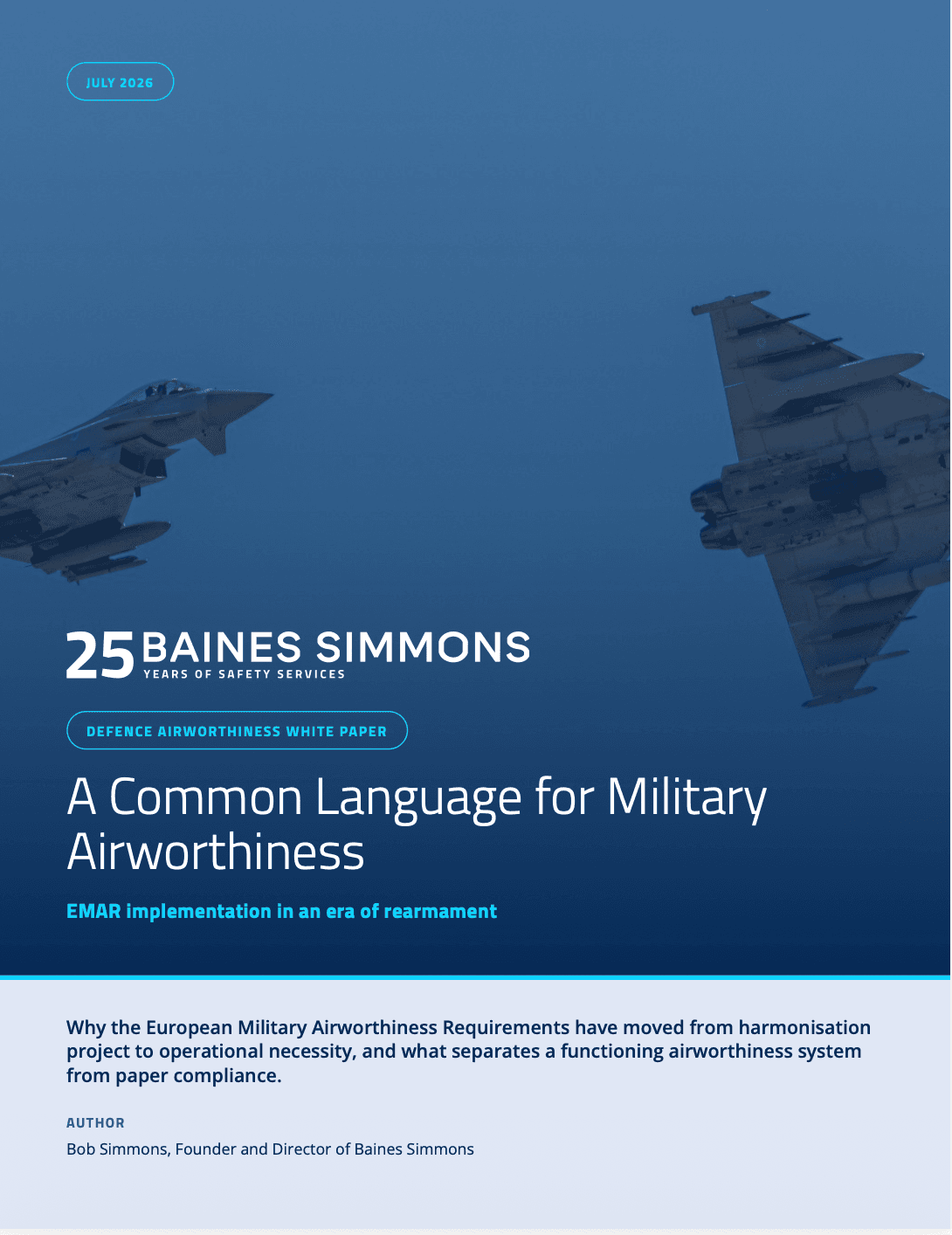
A Common Language for Military Airworthiness

2026

By Bob Simmons

Why the European Military Airworthiness Requirements have moved from harmonisation project to operational necessity, and what separates a functioning airworthiness system from paper compliance.
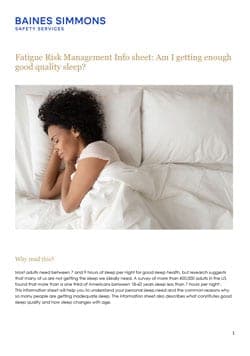
Am I getting enough good quality sleep?

2021

By Dr Cristina Ruscitto

This information sheet will help you to understand your personal sleep need and the common reasons why so many people are getting inadequate sleep. The information sheet also describes what constitutes good sleep quality and how sleep changes with age.

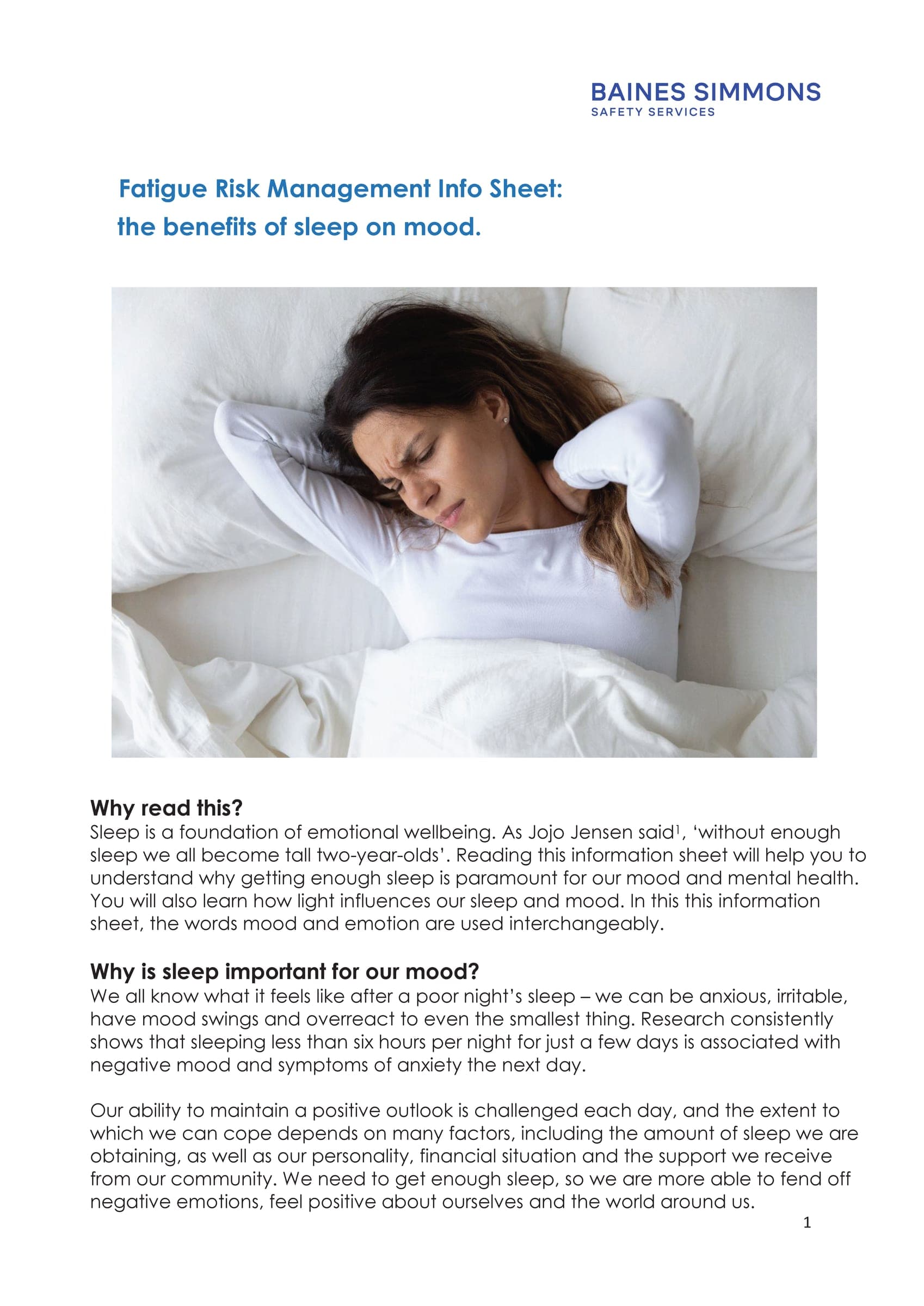
The benefits of sleep on mood

2020

By Dr Cristina Ruscitto

Sleep is a foundation of emotional wellbeing. As Jojo Jensen said, ‘without enough sleep, we all become tall two-year-olds'. Reading this information sheet will help you to understand why getting enough sleep is paramount for our mood and mental health. You will also learn how light influences our sleep and mood. In this information sheet, the words "mood" and "emotion" are used interchangeably.

Understanding the Part 21 Safety Management Element for Production Organisations

2024

By Kevin Hopwood

The evolution of both design and manufacture has taken us to a new place where we can only marvel at the ability of today’s (and tomorrows) aircraft and their capabilities. Collectively though we must ensure that the standards for safety keep pace with the developments we have witnessed.

Hazard Identification and Risk Management Challenges Throughout the Supply Chain

2023

By Duane Kritzinger

The aim of this paper is to raise awareness of the challenges of "hazard identification" and "risk management" throughout the supply chain.

Fatigue Risk Management in European and UK-based Part 145 maintenance organisations

2023

By Sarah Booth and Dr Cristina Ruscitto

This paper is designed to provide an overview of fatigue risk management for operators in Part 145 maintenance organisations with a focus on understanding fatigue risk.

Fatigue Risk Management in the Energy Industry

2023

By Sarah Booth and Dr Cristina Ruscitto

This paper is designed to provide an overview of fatigue risk management guidance and what that means in practical terms for operators in the energy industry.

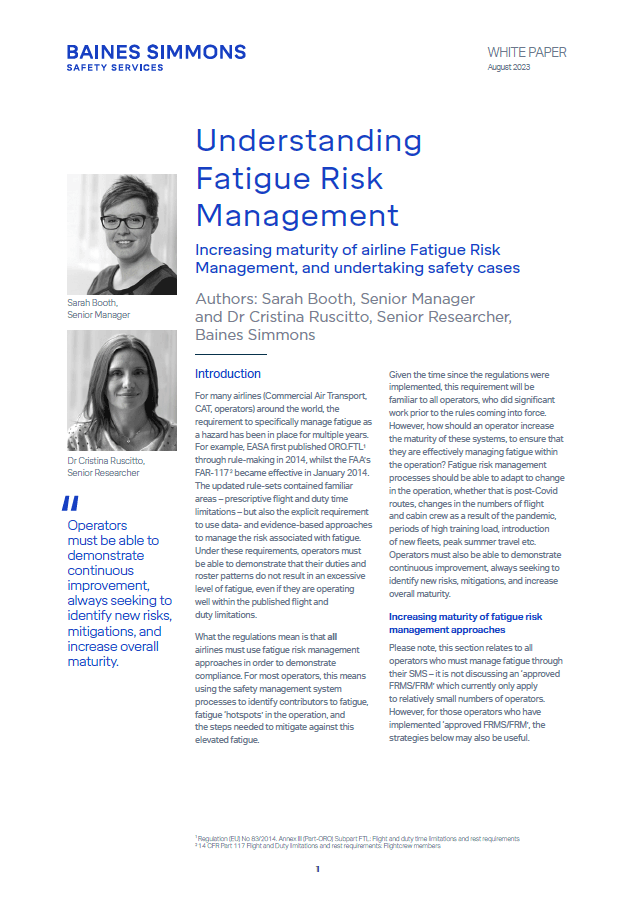
Increasing maturity of airline Fatigue Risk Management

2023

By Sarah Booth and Dr Cristina Ruscitto

This paper is designed to provide an overview on increasing the maturity of airline Fatigue Risk Management (FRM) and how to undertake safety cases.

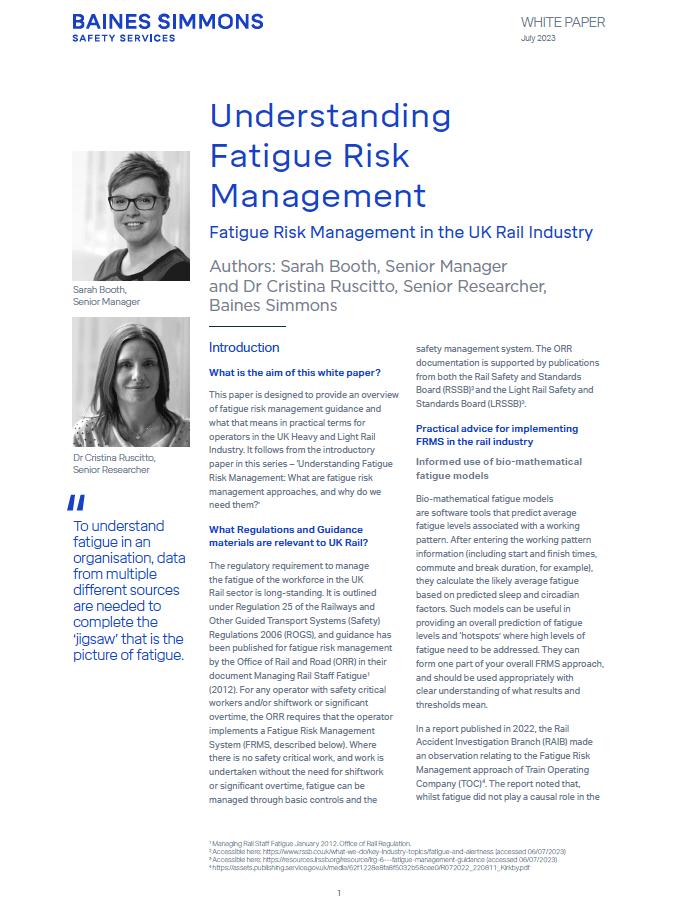
Fatigue Risk Management in the UK Rail Industry

2023

By Sarah Booth and Dr Cristina Ruscitto

This paper is designed to provide an overview of fatigue risk management guidance and what that means in practical terms for operators in the UK Heavy and Light Rail Industry.

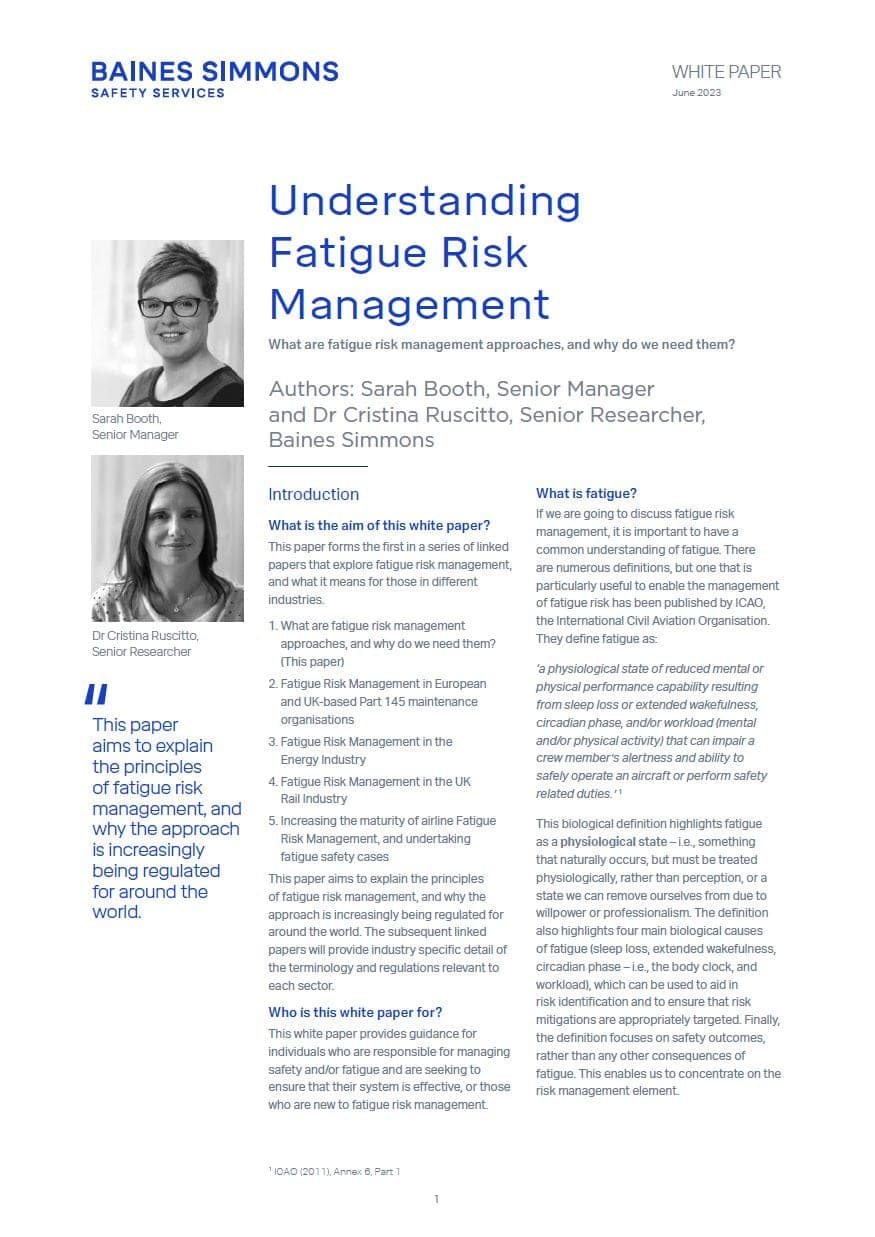
Understanding Fatigue Risk Management

2023

By Sarah Booth and Dr Cristina Ruscitto

This paper aims to explain the principles of fatigue risk management, and why the approach is increasingly being regulated for around the world.

How to cope with insomnia

2023

By Cristina Ruscitto

Insomnia is a sleep disorder that combines dissatisfaction with sleep, with a significant negative impact on daytime functioning. Dissatisfaction with sleep is further defined as difficulty initiating and/or maintaining sleep, or non-restorative sleep, on at least three nights per week for at least three months, despite adequate opportunity to sleep.

Maintenance planning - are you doing it properly?

2023

By Paul White

What does planning ‘properly’ mean to you? What does it mean to your industry peers and how aligned is your understanding with theirs?

Lessons Learned Applying Just Culture in the Workplace

2022

By James Hayton

As a safety consultancy with its roots embedded in the aviation sector, it is very easy to forget that a lot of the processes and practices we help organisations implement and develop are just as applicable to many other safety-critical industries.

The importance of breaks for managing fatigue and improving productivity

2022

By Dr Cristina Ruscitto

Breaks are important because they allow workers to recover from the mental and physical demands of their positions. Breaks outside of the workday allow for sleep, facilitate rest and recovery, improve morale, and ensure safe, efficient operations. Breaks within the workday reduce task-related fatigue, risk of accidents, and improve productivity.

How sleeping more can help me to become a better Manager

2022

By Dr Alexandra Holmes

The information sheet provides advice on how you can get more sleep, and how you can use a positive attitude towards sleep to help your team to sleep more too.

How to help young children with sleep

2022

By Dr Cristina Ruscitto

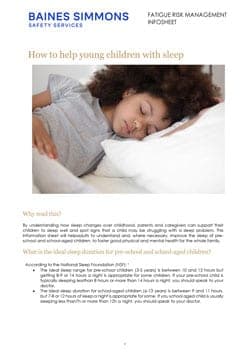
By understanding how sleep changes over childhood, parents and caregivers can support their children to sleep well and spot signs that a child may be struggling with a sleep problem. This information sheet will helpadults to understand and, where necessary, improve the sleep of pre- school and school-aged children, to foster good physical and mental health for the whole family.

How to Improve Sleep in Adults aged 65 and over

2022

By Dr Cristina Ruscitto

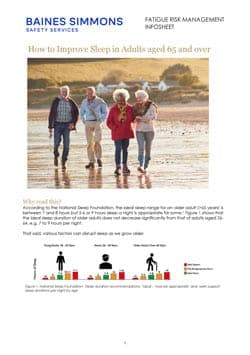
According to the National Sleep Foundation, the ideal sleep range for an older adult (>65 years) is between 7 and 8 hours but 5-6 or 9 hours sleep a night is appropriate for some.1 Figure 1 shows that the ideal sleep duration of older adults does not decrease significantly from that of adults aged 26- 64, e.g. 7 to 9 hours per night.

How can I help my teenager to get more sleep and feel less tired?

2022

By Dr Alexandra Holmes

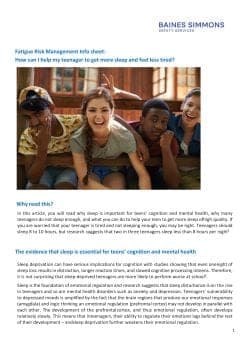
In this article, you will read why sleep is important for teens’ cognition and mental health, why many teenagers do not sleep enough, and what you can do to help your teen to get more sleep of high quality. If you are worried that your teenager is tired and not sleeping enough, you may be right. Teenagers should sleep 8 to 10 hours, but research suggests that two in three teenagers sleep less than 8 hours per night.

How to adjust my daily routines to improve sleep

2021

By Dr Cristina Ruscitto

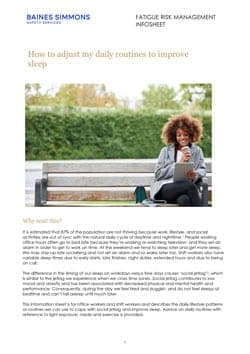
This information sheet is for office workers and shift workers and describes the daily lifestyle patterns or routines we can use to cope with social jetlag and improve sleep. Advice on daily routines with reference to light exposure, meals and exercise is provided.

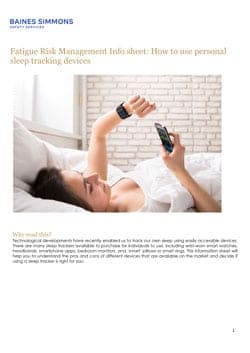
How to use personal sleep tracking devices

2021

By Dr Cristina Ruscitto

Technological developments have recently enabled us to track our own sleep using easily accessible devices. There are many sleep trackers available to purchase for individuals to use, including wrist-worn smart watches, headbands, smartphone apps, bedroom monitors, and ‘smart’ pillows or smart rings.

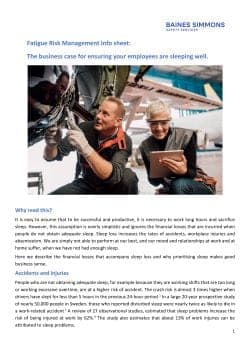
The business case for ensuring your employees are sleeping well

2021

By Dr Alexandra Holmes

It is easy to assume that to be successful and productive, it is necessary to work long hours and sacrifice sleep. However, this assumption is overly simplistic and ignores the financial losses that are incurred when people do not obtain adequate sleep. Sleep loss increases the rates of accidents, workplace injuries and absenteeism.

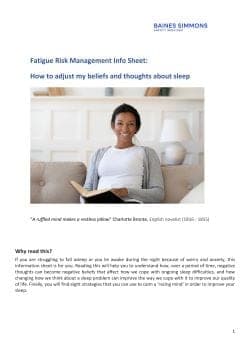
How to adjust my beliefs and thoughts about sleep

2020

By Dr Cristina Ruscitto

If you are struggling to fall asleep or you lie awake during the night because of worry and anxiety, this information sheet is for you. Reading this will help you to understand how, over a period of time, negative thoughts can become negative beliefs that affect how we cope with ongoing sleep difficulties, and how changing how we think about a sleep problem can improve the way we cope with it to improve our quality of life.

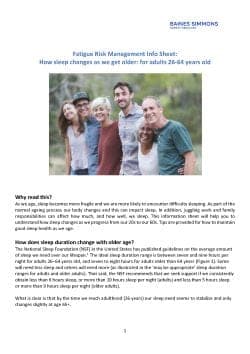
How sleep changes as we get older: for adults 26-64 years old

2020

By Dr Cristina Ruscitto

As we age, sleep becomes more fragile and we are more likely to encounter difficulty sleeping. As part of the normal ageing process our body changes and this can impact sleep. In addition, juggling work and family responsibilities can affect how much, and how well, we sleep.

Why do some people prefer mornings, and others prefer late nights?

2020

By Dr Cristina Ruscitto

Do you like to go to bed early and wake up early, or do you prefer to go to bed and wake up late? Reading this information sheet will help you to understand your genetic preference for sleep timing, known as your circadian type, and the benefits of trying to match your work hours and lifestyle to your type.

Benefits of Sleep for my Physical Health

2020

By Dr Cristina Ruscitto

Sleep is the foundation of good health and relationships. Because good sleep powers alertness and decision making, and is key to our health and wellbeing, it is important for us all, but many of us do not obtain the sleep we need.

Sleep through the lens of culture

2020

By Baines Simmons

We think of sleep as something we do ‘on our own’ but this is hardly the case if we consider that most people sleep with a partner or share accommodation with family, friends or colleagues, have pets, have neighbours, and most importantly are part of a larger community with whom they share a set of values, beliefs and behaviours.

Fatigue Risk Management Info Sheet: Extended Hours

2020

By Baines Simmons

Working for extended hours, whether through a shift system, overtime, on-call, or catching up on work at home following a day in the office, can potentially result in fatigue through sleep loss.

How to seek professional support to help with chronic sleep disorders

2020

By Dr Cristina Ruscitto

Whether you work shifts or 9-5, if you are not sleeping well, this information sheet will help you to decide what to do next, and who you can contact for professional support.

Fatigue Risk Management Info Sheet: Leading a Virtual Team During Covid-19

2020

By Baines Simmons

Over the last 30 years, technology has revolutionised the world of office-based work. Computers now dominate the workspace, and the advancement of communication technologies has enabled companies to keep running during Covid-19, with new working practices established and employees working from home.

Fatigue Risk Management Info Sheet: Breaks

2020

By Baines Simmons

Breaks allow workers to recover from the mental and physical demands of their positions. Breaks outside of the workday allow for sleep, facilitate rest and recovery, improve morale, and ensure safe, efficient operations.

Product Certification and Design Organisation Approval Workshop

2019

By Duane Kritzinger

Duane Kritzinger (Principal Consultant and Part 21 Subject Matter Expert) represented Baines Simmons at the Product Certification & Design Organisation Approval workshop in Cologne.

Sleep and fatigue during Ramadan

2019

By Dr Cristina Ruscitto

An estimated 22% of the world’s population fast during the Muslim holy month of Ramadan. In all countries, fasting individuals do not eat, drink, or smoke from sunrise to sunset. This infosheet looks at the impact on sleep

Redesigning KLM, rethinking safety

2019

By Eric Hoogendijk, Ian Holder, Baines Simmons

KLM Royal Dutch Airlines is an integral part of the journey for more than 32 million people a year, providing scheduled passenger and cargo services to 144 destinations globally through its fleet of 160 aircraft.

Confidentiality - What does EU376 mean?

2017

By Ian Holder

EU376 (The reporting, analysis and follow up of occurrences in Aviation) is a powerful piece of regulation, which supports all organisations in the aviation sector across Europe as a whole in improving safety through reporting and learning.

A Framework For Investigating Fatigue

2017

By Baines Simmons

Fatigue is increasingly considered as one of the most significant hazards to aviation safety and other safety-critical industries. As an illustration, the term ‘fatigue’ has appeared in the NTSB ‘Most Wanted’ list for over two decades.

Harmonising Military Airworthiness through EMARs - A Golden Opportunity?

2016

By Bob Simmons

The easiest way to realise the full potential benefits is for every EDA participating Member State to adopt the EMARs in their purest form, bringing instant standardisation and harmonisation.

Flight Manuals – Why CAMOs need them

2011

By David Innes

The easiest way to realise the full potential benefits is for every EDA participating Member State to adopt the EMARs in their purest form, bringing instant standardisation and harmonisation.

Back to basics? A commentary on the management of Airworthiness

2010

By Neil Richardson

The modern-day challenges faced by the aviation industry are plenty; many focus on the performance of human beings in complex systems. Appropriate behaviour of personnel is key to contributing to systemic safety, but this requires a clear understanding of not only Human Factors, but also the basic concepts of, and relationships between, Airworthiness and Maintenance.
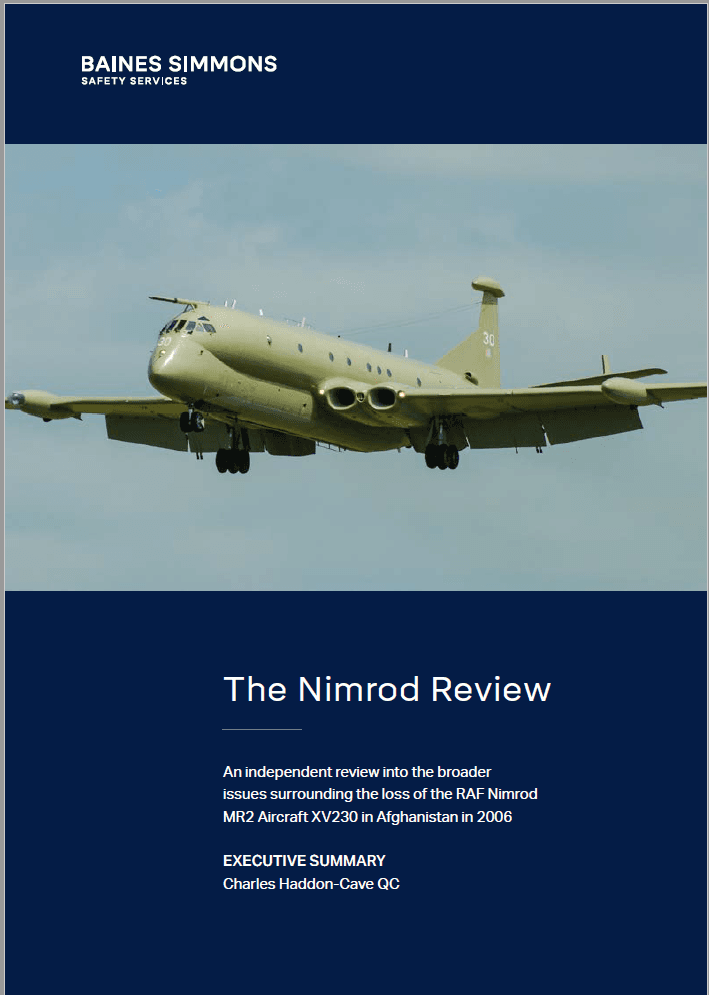
The Nimrod Review

2009

By Charles Haddon-Cave QC

An independent review into the broader issues surrounding the loss of the RAF Nimrod MR2 Aircraft XV230 in Afghanistan in 2006